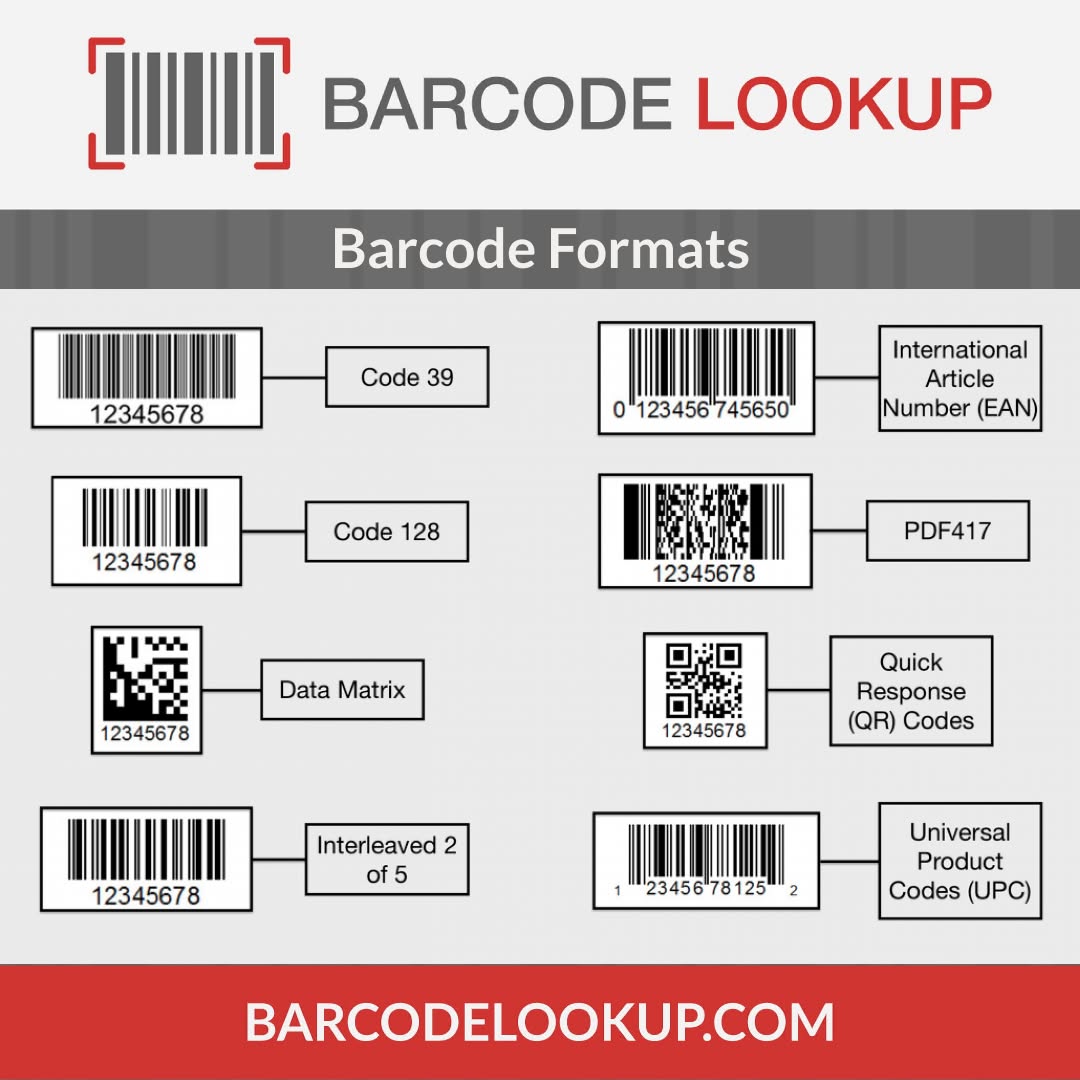
The terms "barcode" and "QR code" are often used interchangeably in everyday conversation, but they describe fundamentally different data encoding formats that solve different problems. A barcode, more precisely called a linear or one-dimensional symbology, encodes data along a single horizontal axis using variable-width bars. A QR code is a two-dimensional matrix symbology that encodes data across both axes using a grid of square modules. The distinction is not just technical. It determines how much data a code can hold, how fast it can be scanned, what equipment is required, and which use cases it suits. This guide breaks down the practical differences and explains when each format is the correct choice, drawing on real data from retail, logistics, and consumer technology.+
The Core Technical Difference
A linear barcode like a UPC-A consists of 12 digits encoded as a pattern of alternating bars and spaces of varying widths. The encoding is one-dimensional because the information flows along a single line from left to right. To scan it, a laser or camera sweeps horizontally across the bars, measures the widths, and converts the pattern back into digits.
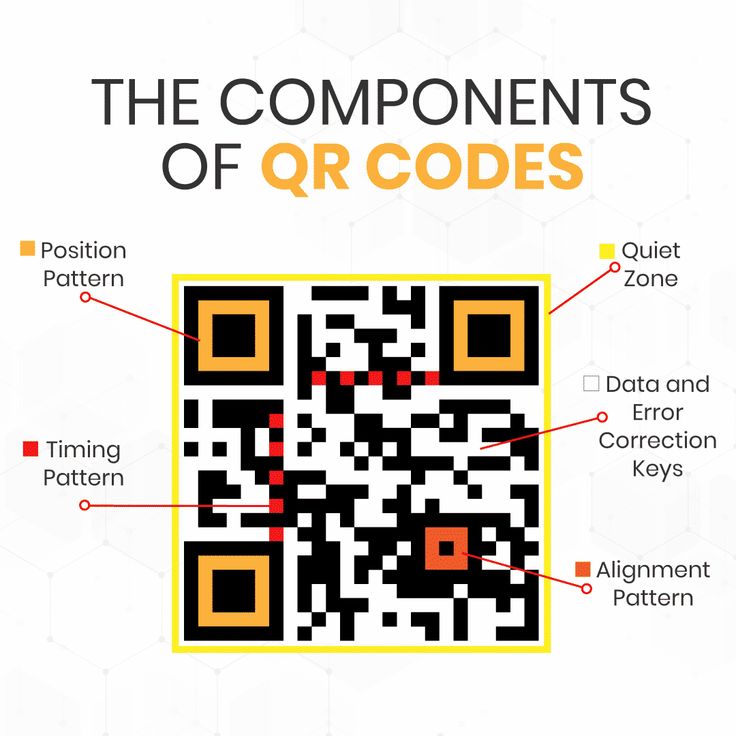
A QR code is a two-dimensional matrix. Data flows vertically and horizontally through a grid of square modules. This extra dimension dramatically increases capacity. A Version 40 QR code at Error Correction Level L stores up to 2,953 bytes of arbitrary binary data. A UPC-A stores exactly 12 digits, which translates to roughly 5 bytes including the check digit.
| Attribute | Linear Barcode (UPC-A) | QR Code (Version 10, Level M) |
|---|---|---|
| Data capacity | 12 numeric digits | 213 alphanumeric characters |
| Shape | Rectangle (wider than tall) | Square |
| Scan direction | Horizontal only | Any angle |
| Error correction | Single check digit | Up to 25% recovery |
| Minimum physical size | ~25mm wide | ~18mm square |
| Scanning hardware | Laser scanner or camera | Camera only |
| Typical resolution needed | 300 DPI printing | 300 DPI printing |
| Cost to generate | Negligible | Negligible |
| Real-world read speed | 50-100 per minute (laser) | 30-60 per minute (camera) |
A Brief History of Both Formats
The linear barcode predates the QR code by more than four decades. Norman Woodland and Bernard Silver filed the first barcode patent in 1949, inspired by Morse code extended into thick and thin bars. Their concentric circle design (the "bullseye" barcode) was adapted into the linear UPC in 1973 by a committee led by George Laurer at IBM. The first UPC scan occurred at a Marsh supermarket in Troy, Ohio on 26 June 1974, when a 10-pack of Wrigley's Juicy Fruit chewing gum became the first product ever scanned at a retail checkout. That pack of gum is now in the Smithsonian.
QR codes arrived in 1994 when Masahiro Hara's team at Denso Wave developed the format for Toyota's automotive parts tracking. The trigger was capacity: the team needed to encode full part numbers, lot codes, and tracking metadata in a single symbol, which no linear barcode could accomplish. Because Denso Wave waived patent enforcement, QR codes became the dominant 2D format globally, while competitors like Data Matrix and PDF417 remained confined to niche applications.
"The barcode was a dumb idea that worked. The QR code was a smart idea that took 20 years to find its moment. Both are now part of the invisible infrastructure of commerce." +
- Dr. Alasdair Gilchrist, author of "Industry 4.0" and RFID/barcode systems researcher
Where Linear Barcodes Still Win
Despite QR codes' greater capacity, linear barcodes remain dominant in several domains and are unlikely to be replaced.
Retail Checkout
The entire global retail supply chain is indexed by GS1-standard UPC and EAN codes. Every point-of-sale terminal, inventory system, and distribution warehouse in the developed world is optimized around these formats. Laser scanners read linear codes faster than cameras can read QR codes because laser sweep is optically cheaper than image analysis. In a retail checkout environment processing thousands of items per hour, the 200 millisecond advantage per scan compounds into meaningful throughput gains.
Physical Space Efficiency
Linear barcodes can be printed in narrow strips on the edge of packaging, while QR codes require square aspect ratios. For products like canned beverages, cigarette packs, or medication blister packs where printable area is limited, a linear barcode fits where a QR code would not.
Legacy Equipment Compatibility
Warehouse handheld scanners, library book check-in machines, and parcel sorting systems often run on hardware deployed a decade or more ago. Replacing that hardware to support 2D symbols is expensive. As long as the equipment works, linear barcodes remain the default.
Price and Inventory Pairing
Because retail POS software expects fixed-length numeric UPC or EAN inputs, retailers cannot easily replace barcodes with QR codes without rewriting the underlying inventory and pricing systems. This is why you see QR codes and UPCs coexisting on modern packaging, with each serving a distinct purpose.
Where QR Codes Win
QR codes excel at consumer-facing applications where a rich payload matters more than raw scan speed.
URL Sharing
A linear barcode cannot reasonably encode a URL. Even the shortest URL exceeds the 12-digit capacity of a UPC. QR codes, by contrast, can encode long URLs with query parameters intact. This is why every modern business card, restaurant menu, and marketing poster uses QR codes rather than barcodes.
Consumer Scanning Without Special Hardware
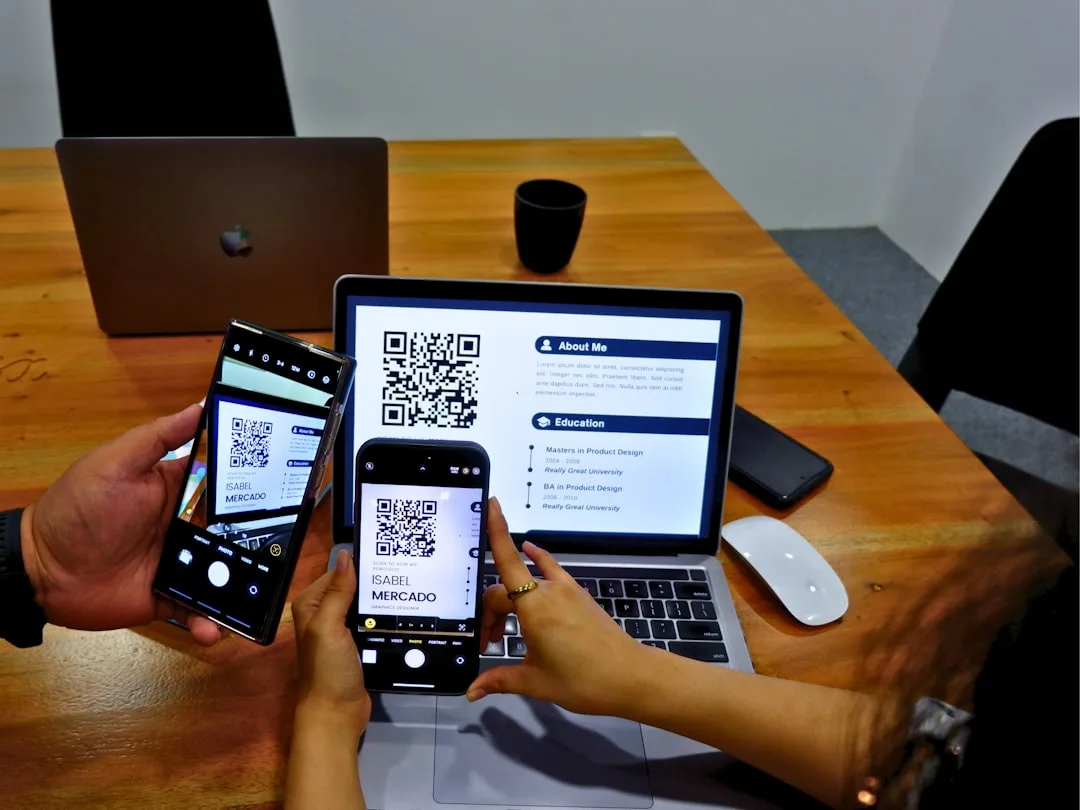
Every modern smartphone has a camera, and every modern operating system decodes QR codes natively. No app install is required. A consumer-facing linear barcode requires either a dedicated app or a product lookup service, creating friction that QR codes eliminate. The free QR code generator at File Converter Free produces codes that work across every mainstream smartphone without any custom app required.
Rich Payloads
QR codes encode structured data like WiFi credentials, vCard contact information, calendar events, and payment addresses. Linear barcodes cannot carry this kind of structure in a practical size.
Error Tolerance
QR codes include Reed-Solomon error correction, recovering up to 30 percent of damaged data. This makes them reliable for outdoor signage, hospitality settings, and any environment where codes are exposed to wear. Linear barcodes without error correction often fail when damaged, forcing manual data entry.
The 2D Barcode Middle Ground
QR codes are the most famous 2D symbology, but they are not the only one. Data Matrix, PDF417, and Aztec codes also encode data in two dimensions, each with tradeoffs.
| Format | Year | Capacity | Common Use |
|---|---|---|---|
| Data Matrix | 1989 | 2,335 alphanumeric | Pharmaceutical tracking, electronics |
| PDF417 | 1991 | 1,850 text characters | Driver licenses, boarding passes |
| QR Code | 1994 | 4,296 alphanumeric | Consumer scanning, payments |
| Aztec | 1995 | 3,067 alphanumeric | Transit tickets, aviation |
| MaxiCode | 1992 | 93 characters | UPS parcel routing |
Each 2D format has a niche. Data Matrix is preferred for small industrial parts because it works at tiny sizes (some are under 2mm square). PDF417 is preferred for documents that need to be laser scanned with standard retail scanners upgraded to 2D capability. Aztec is preferred for travel applications because it does not require a quiet zone, which saves space on already-crowded tickets.
The reason QR codes became dominant in consumer applications is their combination of high capacity, rotational invariance, and the strategic openness of Denso Wave's patent policy. In industrial supply chains, however, Data Matrix is often preferred because it scales down better and survives etching onto metal parts.
Scanning Speed in Practice
Both formats scan fast enough for most use cases, but the speed profiles differ.
Linear barcodes scan in 30 to 100 milliseconds with a dedicated laser scanner at retail checkout ranges. A trained cashier processes 25 to 40 items per minute at a grocery checkout using this hardware. Camera-based smartphone scanning of linear codes takes 500 to 1,500 milliseconds depending on lighting and autofocus speed.
QR codes scan in 100 to 300 milliseconds with a smartphone camera in good lighting. Dedicated 2D imagers (the scanners you see at airports for boarding passes) scan QR codes in under 50 milliseconds. The practical difference is that consumers use smartphones to scan QR codes while businesses use dedicated hardware for barcodes, which makes the relative speed comparison uneven.
"Don't compare QR codes to linear barcodes on speed alone. Compare them on total friction. A consumer pulling out a phone and scanning a QR code is faster than that same consumer typing a URL, which is the real alternative."
- Kaywa Technologies, "2D Barcode Adoption Report 2024"
Industry-Specific Preferences
Different industries have settled on different formats based on their specific constraints.
Retail: UPC and EAN dominate for inventory and checkout. QR codes supplement for consumer engagement. + Logistics: Code 128 dominates for shipping labels because of its variable length and alphanumeric support. PDF417 is used for certain postal formats. + Healthcare: GS1 DataMatrix is the global standard for pharmaceutical packaging under the Drug Supply Chain Security Act in the US and the EU's Falsified Medicines Directive. + Aviation: PDF417 is standard for boarding passes because the International Air Transport Association (IATA) Bar Coded Boarding Pass specification mandates it. Some carriers supplement with Aztec codes for mobile boarding. + Food service: QR codes dominate for menus and ordering. Restaurants using QR-based menu systems have grown from 9 percent in 2019 to roughly 58 percent in 2023, according to the National Restaurant Association's State of the Industry Report. Cafes like Down Under Cafe have fully migrated to QR-driven ordering and menu access. + Professional networking: QR codes on business cards have gone mainstream. Business formation guidance at Corpy now recommends QR-enabled cards for new founders, treating the QR code as table stakes rather than a differentiator. + Education and certification: Study guides and printed practice materials from platforms like Pass4Sure include QR codes linking to digital practice exams, letting learners move fluidly between print and interactive content. +
Generating and Choosing the Right Format
For most modern use cases, the question is not whether to use a linear barcode or a QR code. It is which 2D code to use. For any consumer-facing application with a URL or structured data payload, QR codes are the right answer. For retail inventory or logistics tracking that plugs into GS1-standard systems, linear barcodes remain correct. For pharmaceutical or small-part identification, Data Matrix wins.
When generating a code, the practical considerations are:
1. Scanning hardware. If consumers will scan with phones, use QR. If professionals will scan with laser scanners, use linear.
2. Payload size. Under 13 digits, either works. Over that, use QR.
3. Physical space. Narrow surfaces favor linear. Square surfaces favor QR.
4. Error tolerance needed. Outdoor or industrial environments favor QR's error correction.
5. Legacy system compatibility. If the code feeds into an existing UPC-indexed system, stay with UPC.
The productivity tech coverage at When Notes Fly has written extensively about how the choice of code format shapes user experience, particularly in workflow apps that bridge physical and digital. In written communication, the business writing resources at Evolang note that QR codes have become a standard element of modern resumes and portfolios, where they let recruiters jump directly to a candidate's online work samples.
Cognitive Load and User Experience
One underrated difference between formats is how users perceive them. Cognitive research associated with assessments like those at Whats Your IQ suggests that QR codes are recognized as actionable instantly because the three large corner squares are visually distinctive. Linear barcodes look like any other design element and require explicit context (a "scan here" label) to trigger user action. This perceptual advantage is one reason consumer marketing has shifted almost entirely to QR codes even when the payload is small enough to fit a linear format.
Even niche content sites like Strange Animals use QR codes on printed educational inserts because the visual affordance (meaning, a user's intuitive sense that something is scannable) is stronger with a 2D square than with a horizontal barcode.
Common Mistakes When Choosing a Format
When teams get the format choice wrong, the symptoms are predictable:
- Picking QR for retail checkout. This slows down the cashier because retail POS software expects UPC-indexed input, and the camera scan is slower than the laser scan.
- Picking UPC for a URL. This forces you to use a URL shortener that maps to the UPC digits, adding a layer of redirection and a point of failure.
- Picking QR for pharmaceutical trace. This fails regulatory audits because the global standard in healthcare is GS1 DataMatrix, not QR.
- Picking QR at too small a physical size. Because QR codes are square, shrinking them below roughly 1.5cm per side makes them hard to scan with smartphones. Linear barcodes can be printed smaller if they stay wide.
The right answer is almost always dictated by the existing systems around the code. Pick the format that matches the scanner and the indexing system, not the format you personally find more interesting.
The Future of Both Formats
Linear barcodes are not going away. The installed base of scanners and the global index of UPC numbers is too large to replace in any reasonable timeframe. What is changing is the introduction of GS1 Digital Link, a specification that allows a single QR code to function both as a product identifier (equivalent to a UPC) and as a consumer-facing URL. This hybrid approach lets retailers transition gradually to 2D-capable scanners while keeping their product catalogs intact.
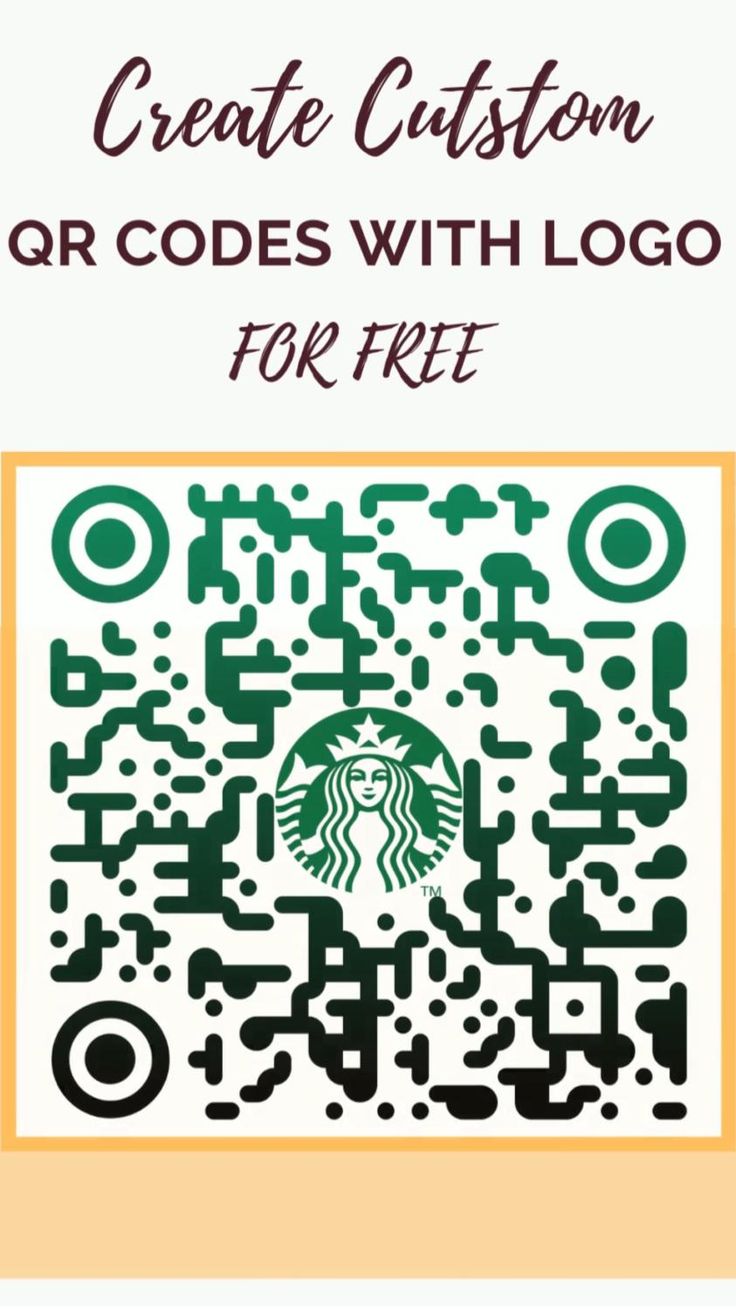
For consumer applications, QR codes will remain the default for the foreseeable future. They are good enough, universally supported, and infinitely flexible. The interesting extensions are visual: branded QR codes with embedded logos, colored variants that match a design system, and animated codes that change destination over time through dynamic redirection. These variations all build on the same 1994 specification, which is a strong argument for its enduring design.
When a team asks whether to use a QR code or a barcode, the answer is usually both, at different points in the workflow. The linear barcode handles inventory and checkout. The QR code handles consumer engagement and rich payloads. Understanding which problem each format solves is the key to using them effectively.
References
1. Woodland, Norman J., and Bernard Silver. "Classifying Apparatus and Method." US Patent 2,612,994, filed 20 October 1949, issued 7 October 1952.
2. GS1. "GS1 General Specifications, Version 24.0." GS1 Global Office, 2024. https://www.gs1.org/standards/barcodes-epcrfid-id-keys/gs1-general-specifications
3. ISO/IEC 15420:2009 "Information technology - Automatic identification and data capture techniques - EAN/UPC bar code symbology specification." https://www.iso.org/standard/46143.html
4. National Restaurant Association. "State of the Restaurant Industry Report 2023." https://restaurant.org/research-and-media/research/industry-statistics/
5. Gilchrist, Alasdair. "Industry 4.0: The Industrial Internet of Things." Apress, 2016. DOI: 10.1007/978-1-4842-2047-4
6. Seideman, Tony. "Barcodes Sweep the World." Wonders of Modern Technology, 1993.
7. Kato, Hiroko, and Keng T. Tan. "Pervasive 2D Barcodes for Camera Phone Applications." IEEE Pervasive Computing 6, no. 4 (2007): 76-85. DOI: 10.1109/MPRV.2007.80
8. Palmer, Roger C. "The Bar Code Book: A Comprehensive Guide to Reading, Printing, Specifying, Evaluating, and Using Bar Code and Other Machine-Readable Symbols." 5th ed. Trafford Publishing, 2007.
Further Reading
Related Articles